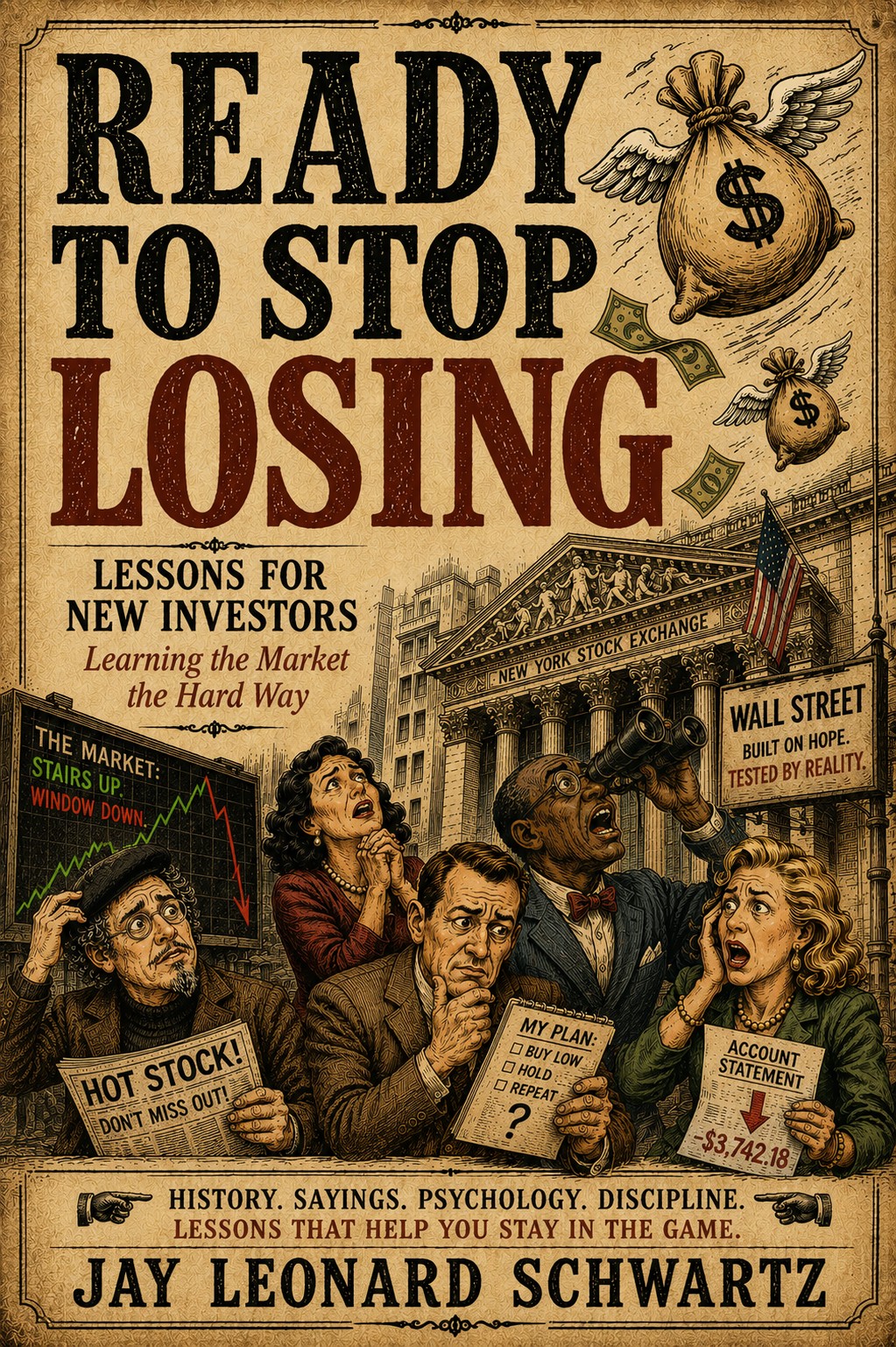
Ready to Stop Losing: What the Market Taught Me About Money, Psychology, and Myself

I have written books about education, Florida, climate upheaval, social dysfunction, poetry, Dada, and assorted forms of absurdity. So perhaps it was inevitable that sooner or later I would write about Wall Street.

My new book, Ready to Stop Losing: Lessons for New Investors Learning the Market the Hard Way,” grew out of my own experience entering the stock market and discovering that much of what makes investing difficult has surprisingly less to do with understanding numbers and, unsurprisingly, much more to do with understanding ourselves.

Now, I can be honest in saying that I am not a stock expert. I am not an analyst. I am not an economist. I do not own or manage a hedge fund. In fact, I wouldn’t even call what I offer in the book advice—certainly not financial advice—but rather an education based on my experience, as well as my interest in the lore and lure of this phenomenon we know as “Wall Street.”

Mostly, the book is about learning patience, taming impulse, and not feeling so stupid for losing money. Isn’t it always true that “experience,” particularly when it costs you money, has a way of getting your attention?

Continue reading
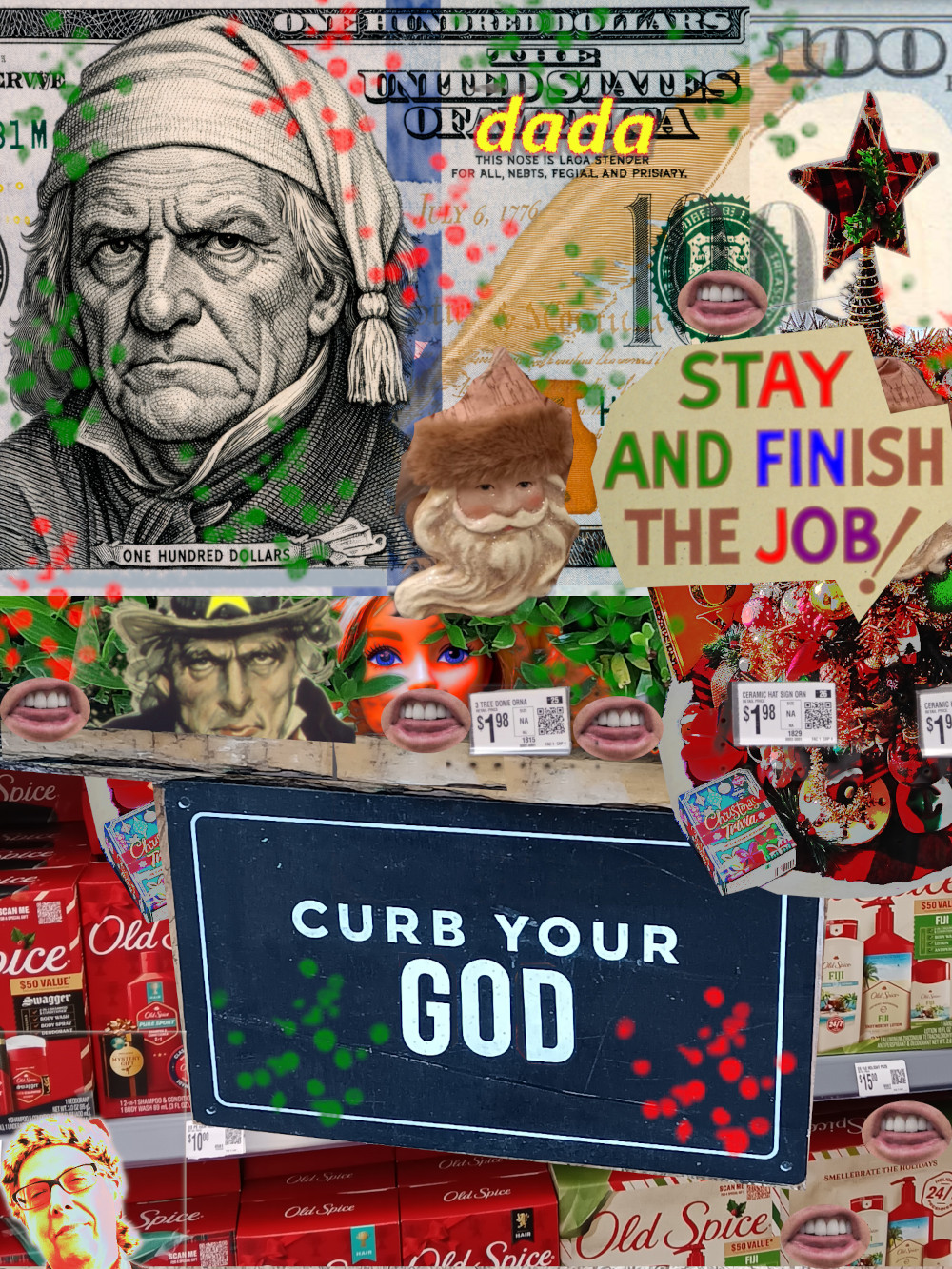
By What Authority?

Authority is usually most anxious when it has to ask where authority comes from.

I was reading the Gospel of Matthew this week—somewhere around the stretch where authority is questioned and hypocrisy is named without much ceremony. There is a moment where Jesus is asked, rather pointedly, “By what authority are you doing these things?” It is a familiar question. Not theological, really. Institutional. Radical, perhaps, but not reckless.

The assumption behind it is simple enough: authority must come from somewhere recognizable. It must be granted, verified, stamped, and preferably issued by people who already have it—so they say, whoever they are. Otherwise, what you are doing may be interesting, even provocative, but it cannot be taken seriously—especially by those whose authority has been safely invested in themselves. The usual suspects, who most certainly have died and left themselves to be boss.

Continue reading

Truth from Fools: Polonius, Dada, and the Teacher’s Path to Authenticity

There’s a strange kind of wisdom that sometimes falls from the lips of fools. Polonius, that verbose courtier from Hamlet, is a prime example. For all his meddling and pomp, he delivers one of the most memorable lines in Shakespeare’s canon: “To thine own self be true.” The irony, of course, is that the man who says it is anything but. Yet the line endures. It endures because, like so much in life, truth is not always delivered by the most trustworthy messengers.

That’s not a bug in the system—it’s a feature. Truth, especially the kind that touches us, doesn’t depend on the purity of its source. In fact, one of the most useful critical thinking habits we can cultivate is separating message from messenger. The wisdom of Polonius isn’t invalidated by his hypocrisy. It’s sharpened by it.

This paradox is especially relevant for teachers—language teachers in particular—who often find themselves navigating between their ideals and the realities of institutional roles, global hierarchies, and personal insecurities. The classroom is part stage, part sanctuary, and the person standing at the front is never just a grammar technician. They are performer, guide, cultural ambassador, disciplinarian, nurturer, and occasionally, reluctant bureaucrat. However, how does one stay true to oneself amid all these shifting roles?

One answer lies in embracing the absurd. Enter the Dadaists.

Continue reading